
Connecting West Michigan: A History of Airport Travel
The journey between an airport and a lakeshore town belongs to a much larger story. Long before passengers walked through modern terminals, people relied on waterways, horse-drawn vehicles, railway stations and local drivers to reach their destinations. Every new form of transportation changed where people could work, whom they could visit and how far they could travel. Yet even the greatest advances left a familiar question at the end of the journey: how do we get from here to where we actually need to be?
That question connects the history of taxis, limousines and shuttles with the development of West Michigan. A railway could bring a visitor into a city, but a carriage completed the trip to a hotel. An airplane could cross the country, but a driver still needed to carry a family and its luggage to the lakeshore. The vehicles became faster, more comfortable and easier to reserve, while the practical value of a dependable local connection remained.
For Slingshot Taxi, this history is close to home. Our airport transportation connects Grand Rapids, Muskegon, Grand Haven, Spring Lake, Ferrysburg, Holland, West Olive, Port Sheldon, Saugatuck, South Haven, Pentwater, Ludington and Traverse City with regional airport gateways. Gerald R. Ford International Airport, Detroit Metropolitan Wayne County Airport and Chicago O’Hare International Airport each have their own place in that story. So do the communities along Lake Michigan, where harbors, timber, industry, tourism and family life have shaped generations of travel.
Today, our main focus is prearranged airport shuttle service. We also provide long-distance transportation to special destinations by individual quote. Understanding the history behind these services helps explain why personal ground transportation still matters in an age when a flight can take us thousands of miles in a few hours.
From Horse Drawn Carriages to the First Motor Taxis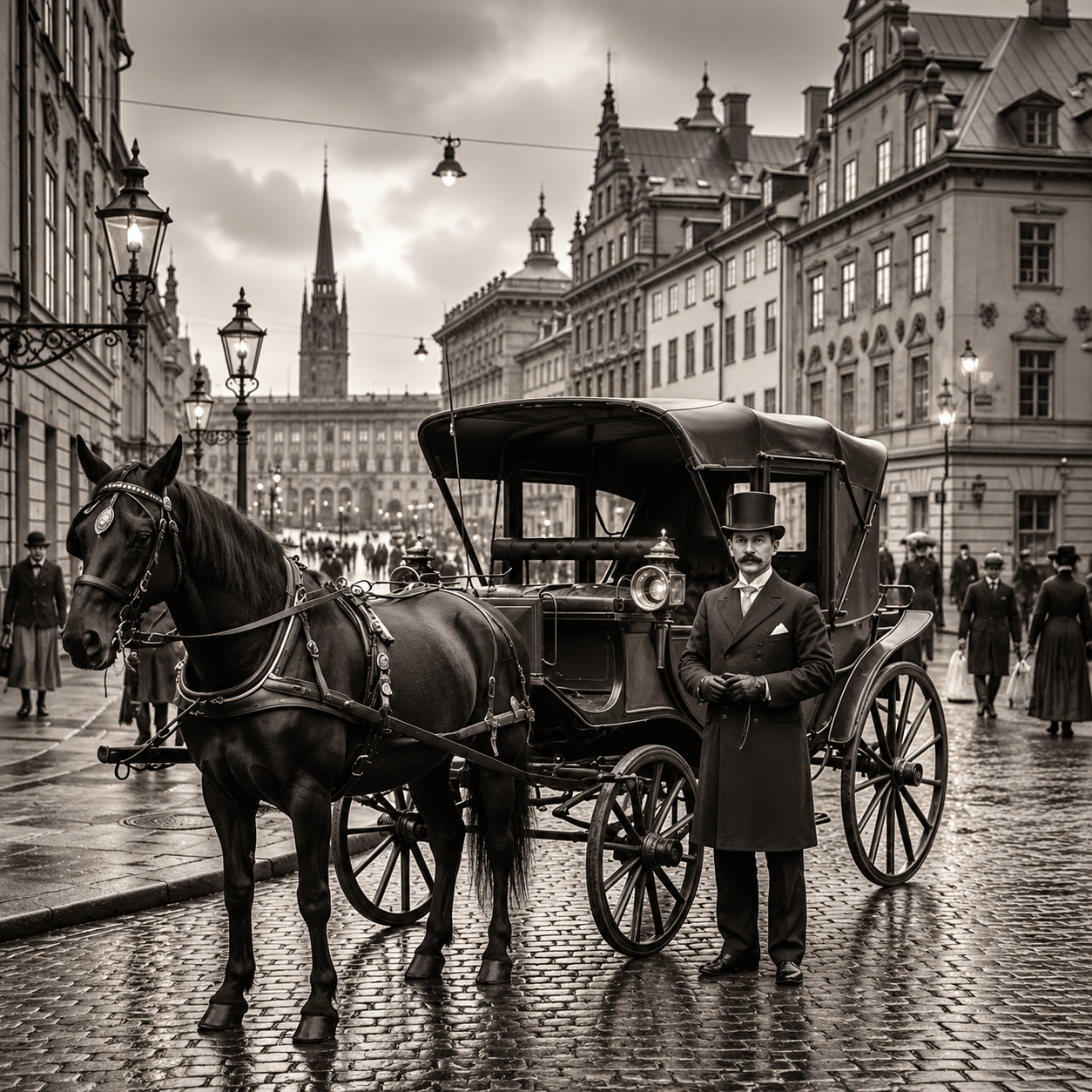
The taxi’s roots reach back to passenger carriages available for hire. Instead of owning a horse and vehicle, a traveler could pay a driver to make a particular journey. This arrangement supplied something a fixed route could not always offer: transportation chosen around the passenger’s destination. The idea was simple, but its usefulness grew as cities expanded and people moved between homes, markets, inns and transport terminals.
One of the most recognizable nineteenth-century vehicles was the hansom cab. Joseph Hansom introduced his original design in 1834, and the familiar form developed through subsequent improvements. Its compact, two-wheeled layout became associated with urban passenger travel. The carriage protected its occupants more than an open vehicle while allowing a driver to work through busy streets. The hansom survives in historical photographs and museum collections as a reminder that the familiar relationship between a passenger and a hired driver existed long before the automobile.
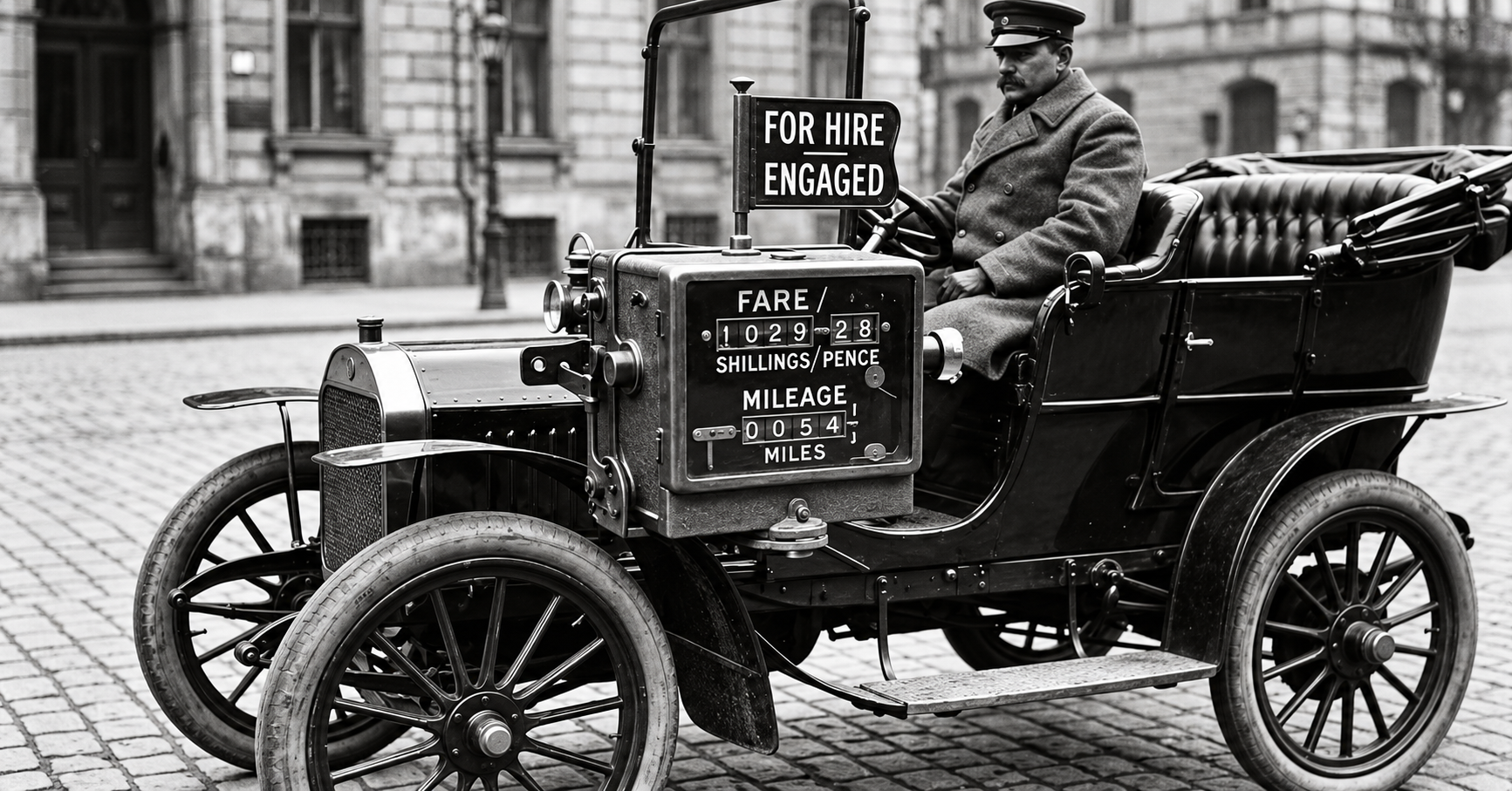
The transition to motor vehicles brought new possibilities. Mercedes-Benz’s historical archive records the delivery of a taximeter-equipped Daimler Victoria to Stuttgart operator Friedrich August Greiner in May 1897. It entered service that June. This early motor cab combined a powered vehicle with a device for measuring the fare, bringing two important features of the modern taxi together. A passenger could hire transportation without supplying the vehicle, while an operator could calculate a charge through a mechanical system.
The taximeter also gave the taxi its name. The Henry Ford’s collection explains that the term developed from the French word for a fare-calculating meter. Meters introduced in the late nineteenth century measured distance and helped determine what a ride cost. Their spread made the instrument part of the identity of the service itself. A taxi was no longer simply a carriage with a driver; it was increasingly recognized as a vehicle whose charge could be measured.
Early motor taxis were not all powered by gasoline. The Henry Ford documents electric vehicles used in the first wave of motorized cab service. Their quiet operation offered an appealing alternative to horses. Gasoline vehicles and mass-produced automobiles subsequently became prominent, but the early electric chapter is an interesting reminder that transportation history rarely follows a perfectly straight line. Some ideas return in new forms when engineering, infrastructure and customer expectations change.
The Ford Model T helped make the automobile practical for working operators as well as private owners. The museum’s 1917 taxicab illustrates how a familiar production car could be adapted to passenger service. Purchase price and operating expense mattered because a cab was a tool used repeatedly throughout the working day. A vehicle needed to earn its keep, carry passengers comfortably and remain serviceable after many journeys. These concerns still shape the choices of small transportation businesses.
Replacing a horse with an engine also changed the driver’s work. Stables, feed and animal care gradually gave way to garages, fuel and mechanical maintenance. A driver still needed judgment and familiarity with local streets, but now the condition of the vehicle depended on another set of skills. Seen together, the old carriage and the early motor cab reveal both continuity and change: the machinery evolved while the responsibility for delivering the passenger remained.
The Taxi Becomes Part of American Life
As the automobile became a common sight, taxicabs became familiar companions to railway depots, hotels and commercial districts. A cab could handle a journey that began at a specific address and ended at another, rather than requiring the traveler to follow an established transit route. That flexibility mattered when someone arrived with luggage, needed to keep an appointment or was unfamiliar with the city. It also made the driver an important point of contact between a visitor and a place.
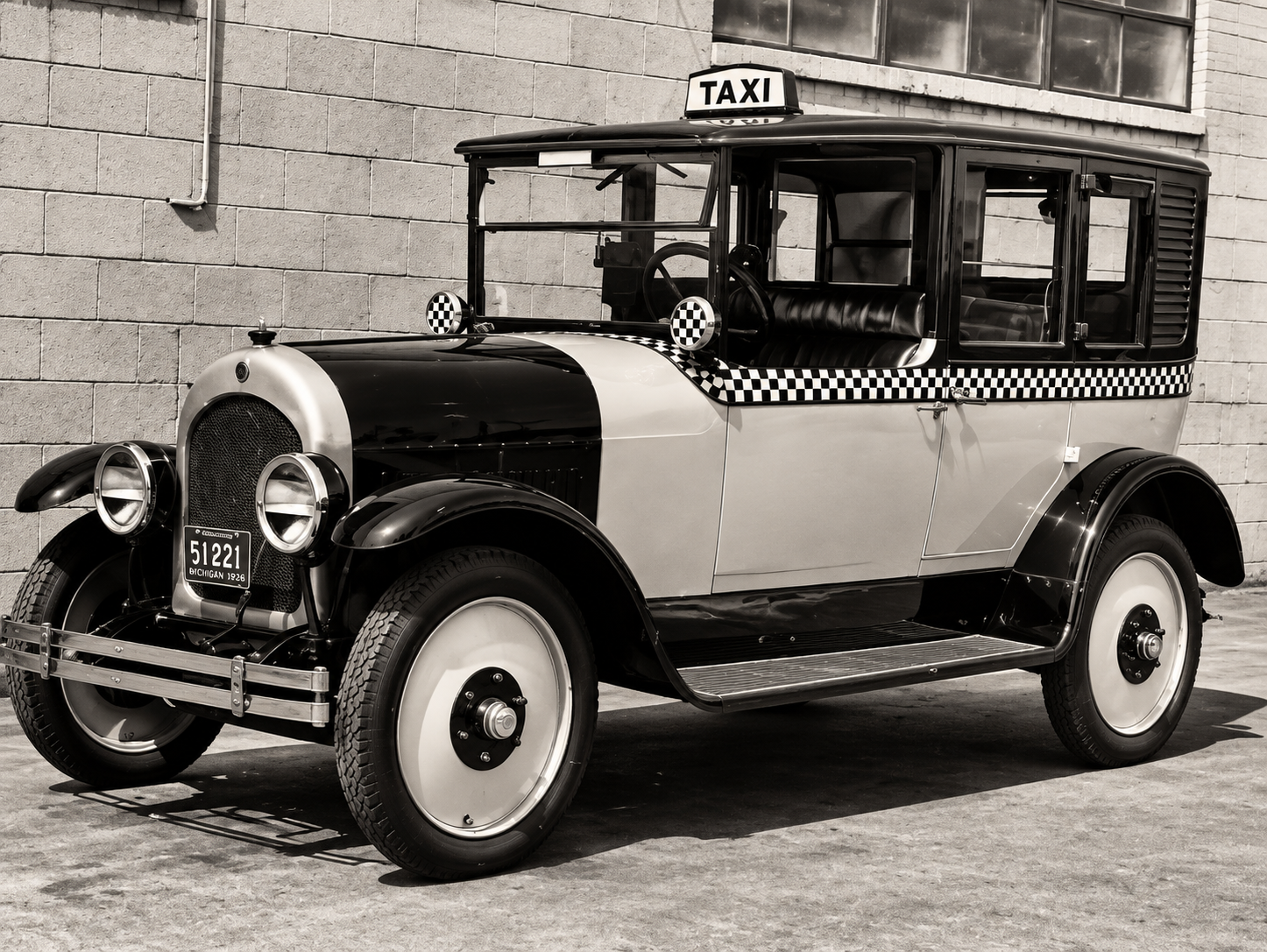
Michigan made an especially recognizable contribution through Checker. The Henry Ford’s documentation of a 1923 Checker photograph traces the company’s formation to Morris Markin’s combination of a taxi-body business with a chassis manufacturer in 1922. Checker established its manufacturing base in Kalamazoo, between Chicago and Detroit. The location placed it within a region already closely connected to automobile production and commercial passenger transportation.
The lasting appeal of Checker vehicles reflected the demands of working transportation. Their roomy interiors and practical construction were useful to people entering and leaving a vehicle many times a day. The museum’s broader taxicab history describes a company that emphasized durability and remained recognizable through conservative styling. Checker ended taxi production in 1982, but the shape of its cars remained part of the public image of an American cab.
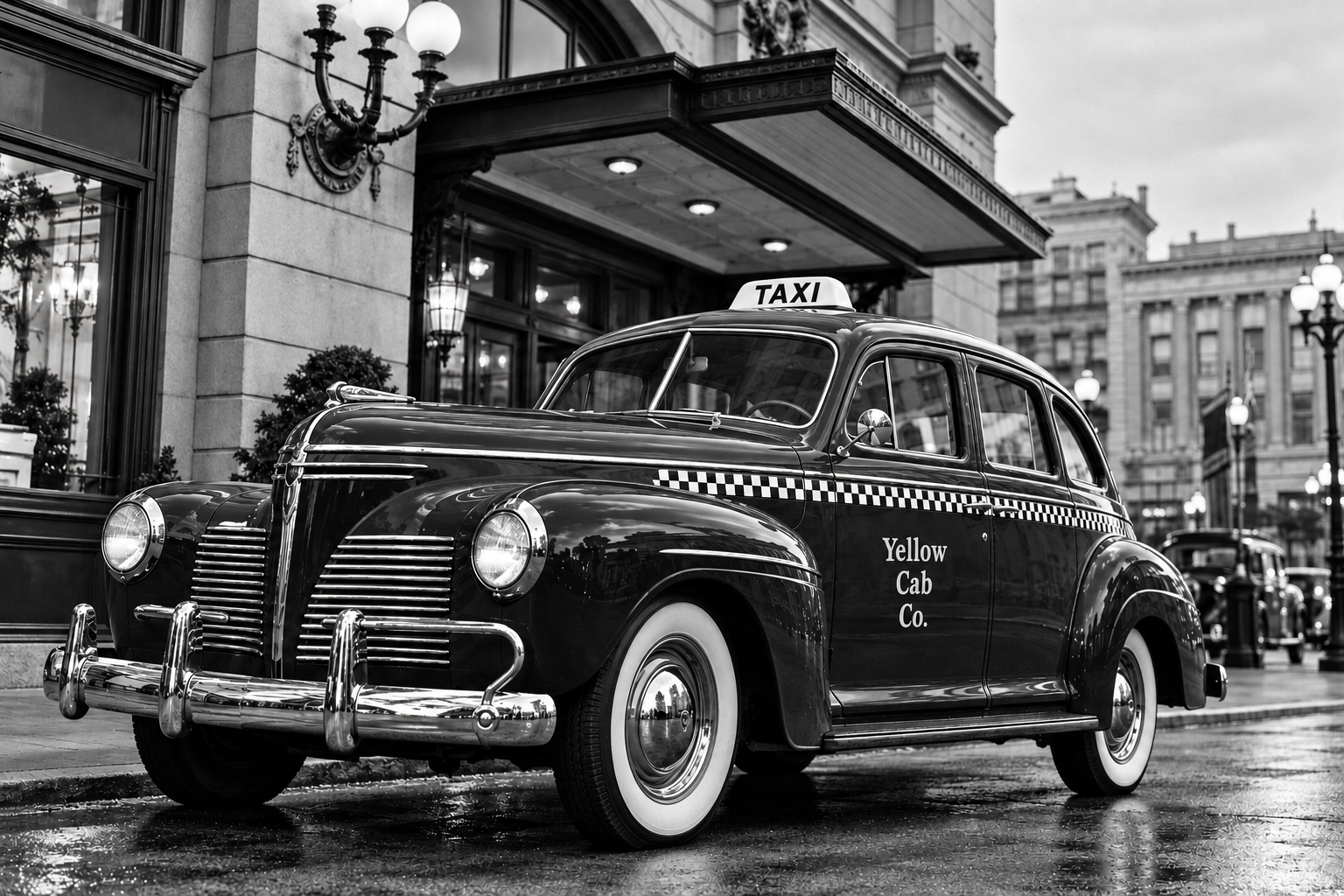
There is a lesson in that practical design. A transportation vehicle is experienced from the passenger seat as much as it is seen from the sidewalk. Entry, seating, luggage space, cleanliness and comfort influence a trip in ways that a photograph of the exterior cannot fully communicate. The most memorable part of a ride may be the ease of getting settled after a long day rather than the appearance of the car itself.
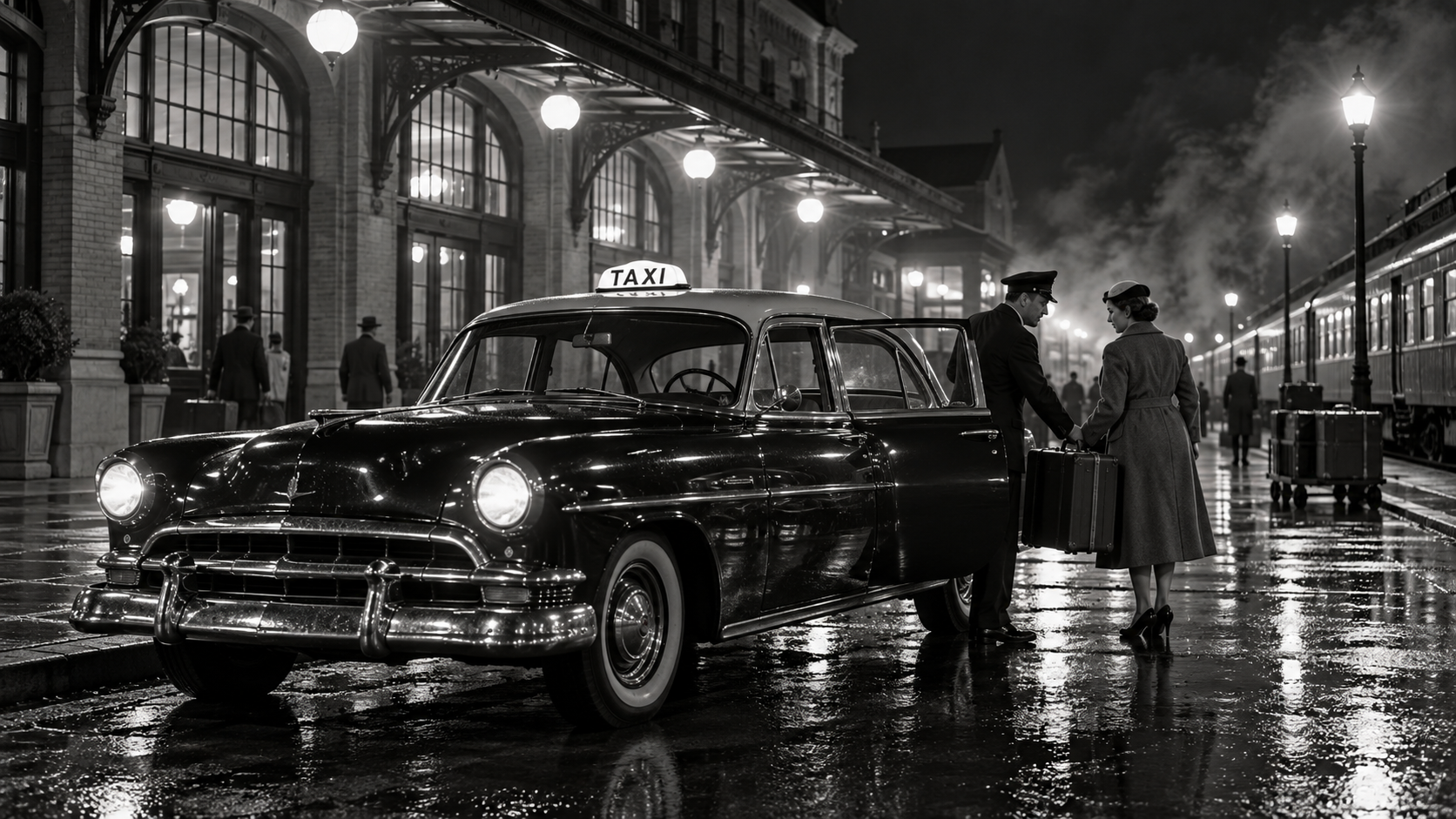
Modern communication has changed how passengers find drivers. A journey may now begin with an online reservation instead of a conversation at a cab stand. Details can be exchanged before travel, and the pickup address can be established in advance. For a planned airport trip, this shifts attention toward preparation: who is traveling, which airport is involved, where the passengers need to go and what time the ground portion of the journey should begin.
The meaning of good service has remained understandable through all these changes. The traveler wants a clear arrangement, a suitable vehicle and a driver who takes the trip seriously. A transportation business succeeds when it treats those ordinary expectations as the substance of the work. New technology can make arrangements easier, but the actual journey still depends on people carrying out what was agreed.
No history of the American taxi is complete without Checker Motors of Kalamazoo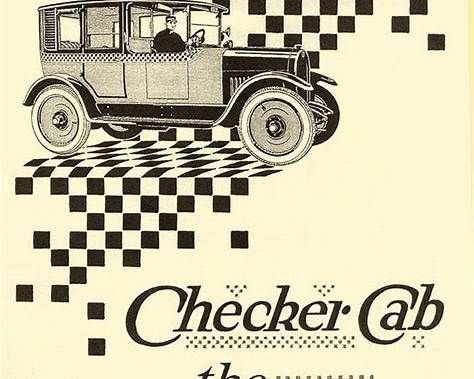
Checker Motors Corporation became one of Kalamazoo, Michigan’s most recognizable contributions to American automotive history, although its beginnings were rooted in Chicago.
The company’s story is closely associated with Morris Markin, a Russian immigrant who became involved in automobile-body manufacturing and Chicago’s rapidly growing taxicab industry. In 1922, Markin combined his automobile-body business with Commonwealth Motors to establish the Checker Cab Manufacturing Company.
From Chicago to Kalamazoo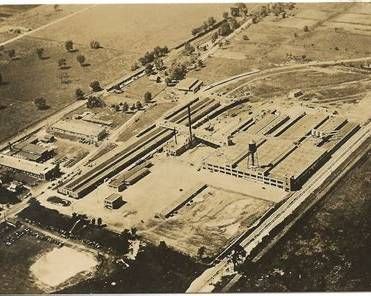
In 1923, Checker moved its manufacturing operations to Kalamazoo, where Markin acquired former automobile factories along Pitcher Street. Kalamazoo offered existing manufacturing facilities, experienced automobile workers, and excellent transportation connections.
The move also occurred during Chicago’s turbulent “taxicab wars,” a period of intense—and sometimes violent—competition among taxi companies. Markin’s Chicago home was even bombed in 1923.
Kalamazoo would remain Checker’s manufacturing home for nearly six decades.
Building the American Taxi
Checker was different from most automobile manufacturers because its vehicles were designed specifically for the demanding commercial taxi business.
Checker automobiles became famous for their rugged construction, large doors, enormous rear seats, spacious interiors, and exceptional durability. Rather than constantly redesigning its cars, Checker emphasized practicality and longevity.
By the middle of the twentieth century, Checker taxis had become familiar sights throughout the United States, particularly in cities such as New York and Chicago.
In 1958, the company became Checker Motors Corporation. Checker also sold passenger versions of its vehicles to the public, most famously the Checker Marathon.
A Kalamazoo Automotive Legacy
Checker eventually became an important part of Kalamazoo’s industrial identity. For decades, workers in Michigan manufactured taxis that carried millions of passengers across America.
While Detroit dominated American automobile manufacturing, Kalamazoo became the home of perhaps the most recognizable purpose-built American taxicab ever produced.
The Last Checker
By the late 1970s and early 1980s, changing safety and emissions regulations, increasing production costs, and competition from conventional passenger cars made Checker's aging automobile platform increasingly difficult to produce economically.
On July 12, 1982, the final Checker automobile rolled off the Kalamazoo assembly line, ending nearly 60 years of Checker vehicle production.
Checker Motors itself survived, however. The Kalamazoo company continued manufacturing automotive components for other automakers for another 27 years.
In 2009, during the severe downturn in the American automobile industry, Checker Motors entered bankruptcy and eventually ceased operations.
An American Transportation Icon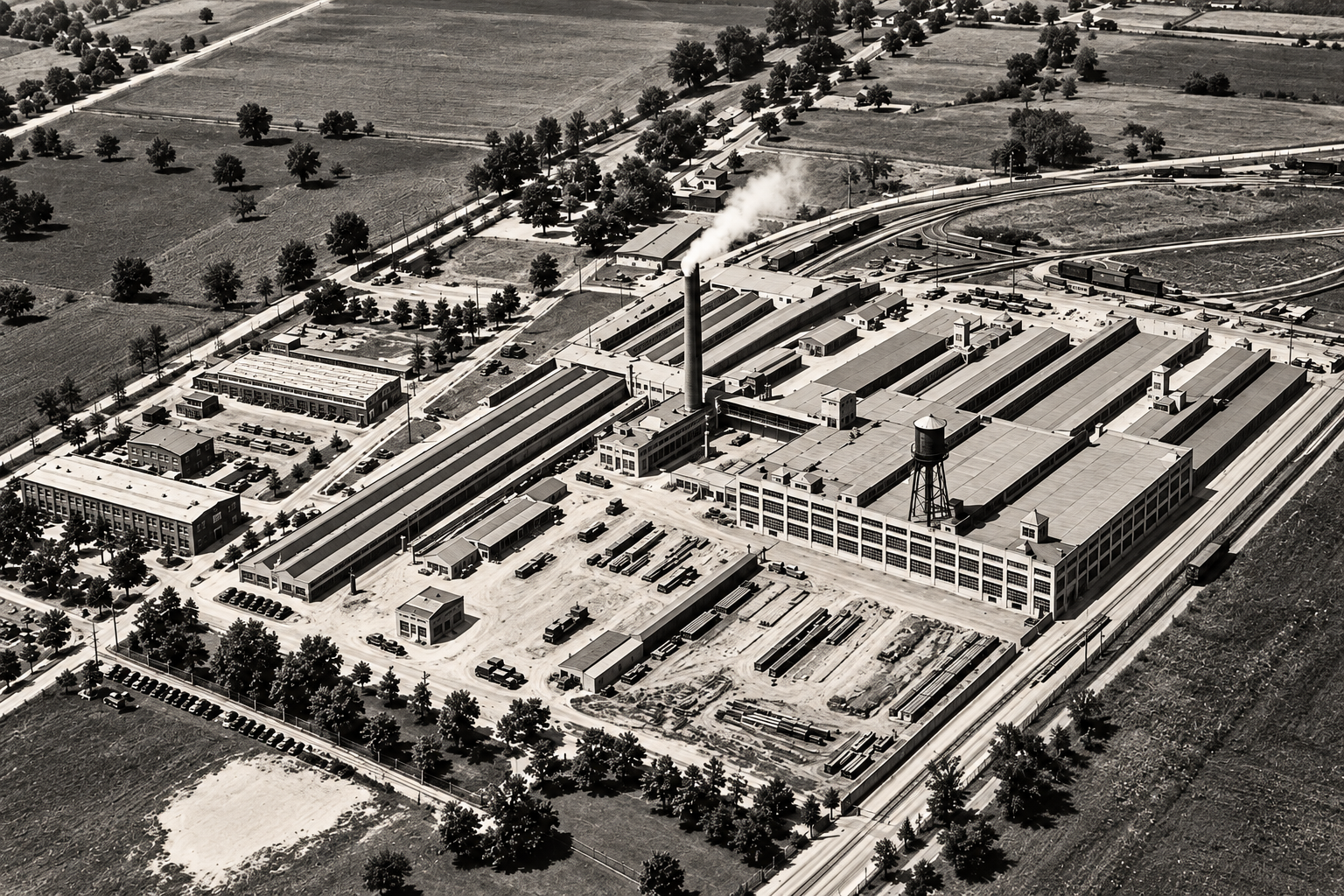
Today, the Checker remains one of the most recognizable symbols in American taxi history. Its tall roof, massive passenger compartment, distinctive shape, and reputation for extraordinary durability made it almost synonymous with the word “taxicab.”
Although its origins were connected to Chicago, Kalamazoo, Michigan became the true home of Checker Motors—the place where an automobile built specifically to transport passengers became an enduring piece of American transportation history.
Limousines and the Tradition of the Chauffeur
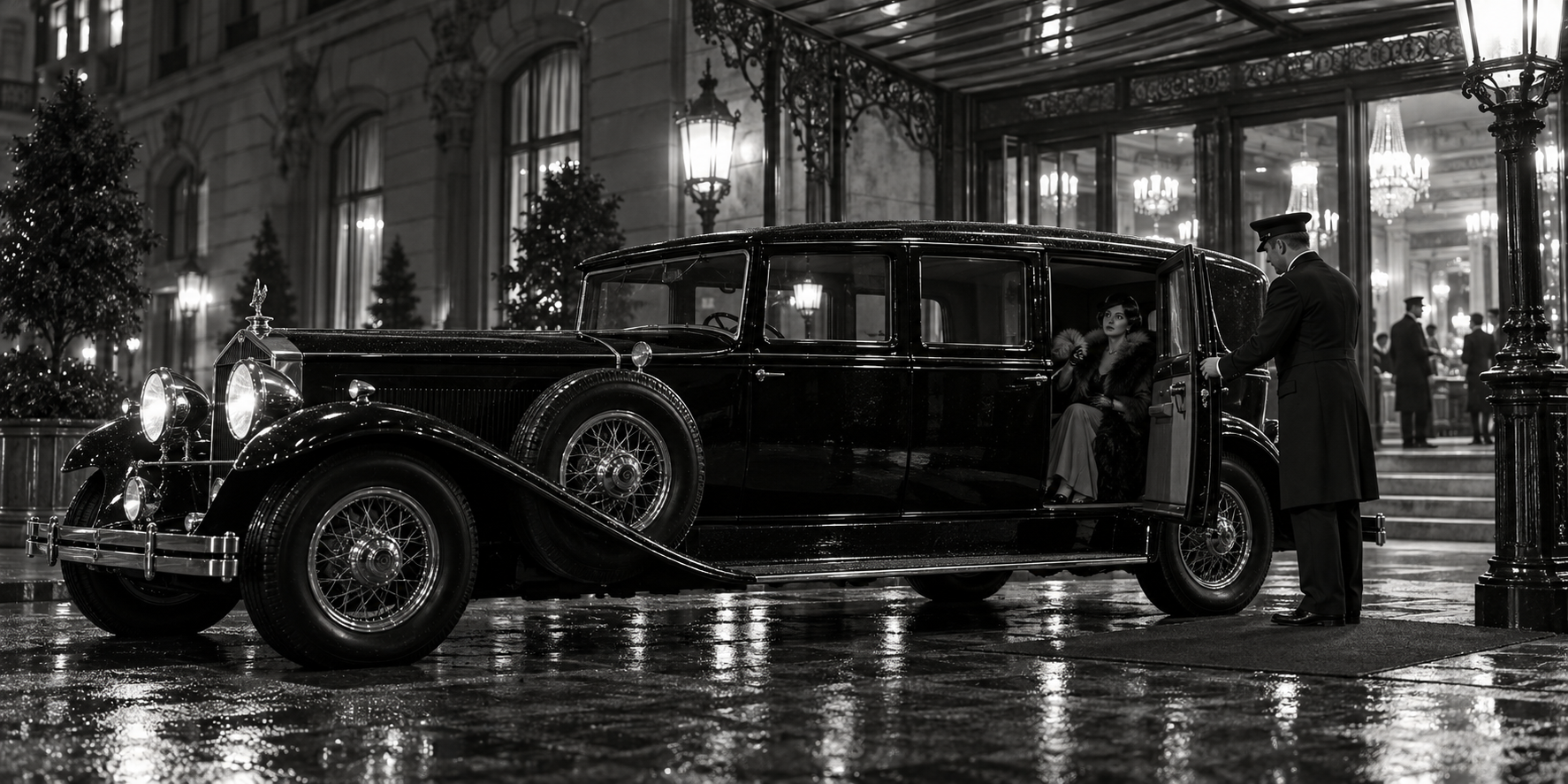
The limousine developed alongside the taxi, serving a different set of expectations around private travel and comfort. Historically, the word described a type of automobile body and did not necessarily mean the very long stretch vehicle many people picture today. Early examples emphasized an enclosed passenger area and a distinction between the person driving and the people being carried. The service surrounding the vehicle became as important to its identity as the vehicle’s size.
The Henry Ford’s photograph of a chauffeur with a 1914 Renault limousine offers a useful glimpse of that world. Its historical explanation notes that wealthy motorists employed chauffeur-mechanics who could drive, maintain and repair their expensive automobiles. The chauffeur’s work extended beyond steering. Reliability required someone who understood the machine and could keep it ready for its owner’s travel.
This relationship helps explain the lasting connection between chauffeured transportation and preparation. The passenger was paying for the ability to travel without handling every practical detail personally. Knowing the destination, preparing the vehicle and presenting it in suitable condition were part of the service. These responsibilities remain relevant even when the vehicle is a modern sedan, sport utility vehicle or minivan rather than a traditional limousine.
Over time, the public image of the limousine widened to include celebrations, formal arrivals and business transportation. The stretch limousine became a particularly recognizable expression of private group travel. But length alone does not explain why people hire a driver. The deeper purpose is to place the driving and arrangements in someone else’s hands while passengers concentrate on the reason for their journey.
Taxi, limousine and shuttle services therefore share some roots while serving different needs. A taxi is commonly associated with an individual trip requested when needed. A limousine is associated with reserved chauffeured transportation. A shuttle is associated with connecting travelers to a terminal, destination or recurring travel point. Those everyday descriptions overlap, and terminology can vary, but the useful question for a passenger is always what the particular provider actually offers.
Slingshot Taxi’s name reflects the broader tradition of hired transportation, while our current service centers on airport shuttles booked in advance and individually quoted long-distance trips. The history of limousines belongs in the story because it helps explain the tradition of personal driving service. It does not mean that every company discussing this history operates stretch limousines or provides the same services.
How Airport Shuttles Completed the Journey
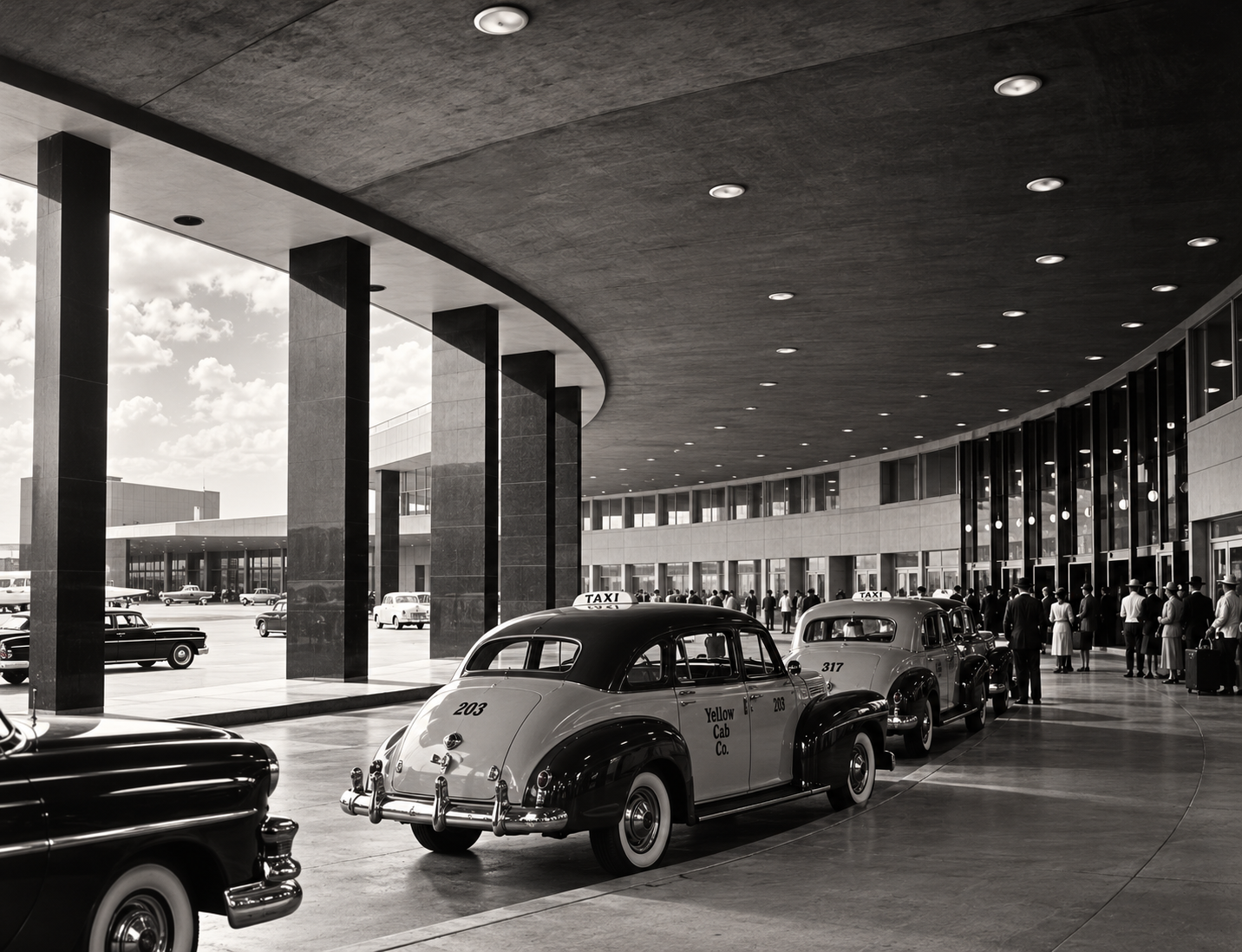
Air travel introduced another kind of terminal and another need for a ground connection. An airport could carry passengers between regions, but an airline ticket did not deliver a visitor to a lakeshore home or a hotel. The flight was only one stage. Ground transportation supplied the remaining link, whether through a taxi, a reserved car, a hotel vehicle or a larger shuttle.
The shuttle is best understood through that connecting role. Within an airport, a shuttle may move people between parking and a terminal. Around an airport, it may connect lodging with departing and arriving flights. Over a longer distance, a reserved shuttle may connect the airport with a city or community that lies well beyond its immediate surroundings. The word describes a travel function, and that function can be carried out by several kinds of vehicle.
The Checker Aerobus provides an interesting Michigan example of the relationship between taxis, extended vehicles and airport travel. Built in Kalamazoo between 1962 and 1977, it used an elongated Checker design to accommodate more passengers and luggage. Its airport-oriented purpose linked the familiar taxi body with a group transportation need. Looking at the Aerobus makes it easier to see how the boundaries between cab, limousine and shuttle developed around practical requirements rather than entirely separate inventions.
Group airport travel raises questions that a short solo trip may not. Passengers may bring suitcases for a week away, arrive after a connecting flight or need transportation to several different kinds of accommodation. The journey must make sense as a whole. The useful measure of a vehicle is whether it suits the passengers and their belongings, and the useful measure of an arrangement is whether the pickup and destination are clear.
For a traveler coming to West Michigan, the distance between the terminal and the final destination can be substantial. Grand Rapids is not Muskegon, and Grand Haven is not Traverse City. Choosing an airport involves thinking about both the available flight and the ground trip that follows. A convenient airfare can still leave a long drive, while a nearer airport may offer a simpler connection to the lakeshore.
This is why airport shuttle service remains relevant alongside rental cars and other transportation options. Some passengers prefer to have the ground portion arranged before they leave home. Others want to avoid driving after a tiring flight or coordinating a ride with someone else’s schedule. Prearranged transportation turns that part of the trip into an established plan rather than a question left for arrival.
Gerald R. Ford International Airport and the Growth of West Michigan Aviation
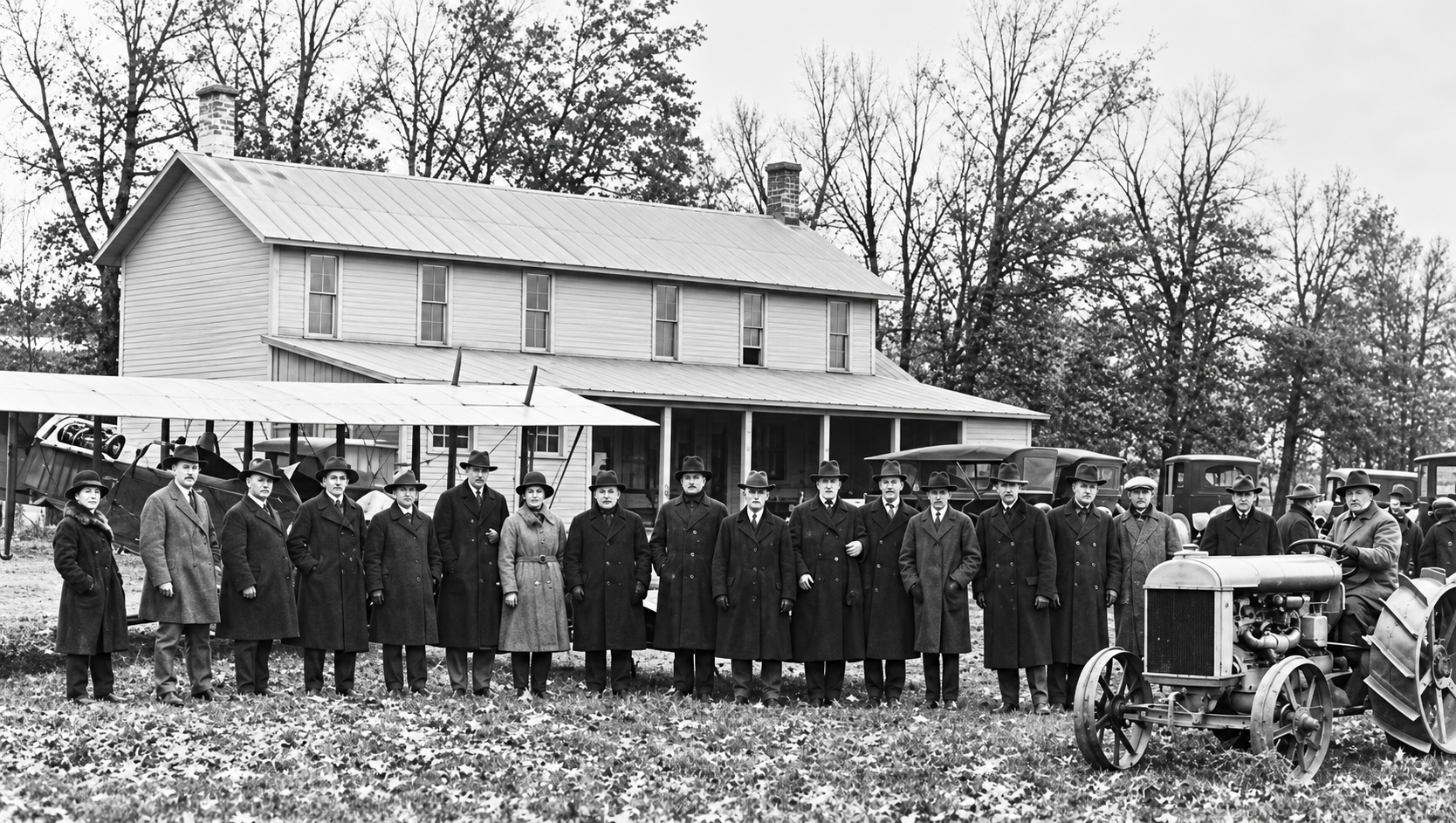
The history of GRR begins before the opening of its present location. The airport’s official timeline records a Wright biplane demonstration at Comstock Park in 1911 and groundbreaking for Kent County’s first airport in 1919. These early events placed aviation within a region whose businesses and residents were already connected by roads, waterways and rail. Aircraft introduced another possibility for carrying people and goods beyond West Michigan.
As demand increased, the earlier airport needed more room. The major transition came on November 23, 1963, when air service moved to the new facility in Cascade Township. The airport was formally dedicated in 1964. It became Kent County International Airport in 1977 following the opening of a customs office, then received the name Gerald R. Ford International Airport in 1999. The name honored the president whose public life and long relationship with Grand Rapids made him an important figure in West Michigan’s identity.
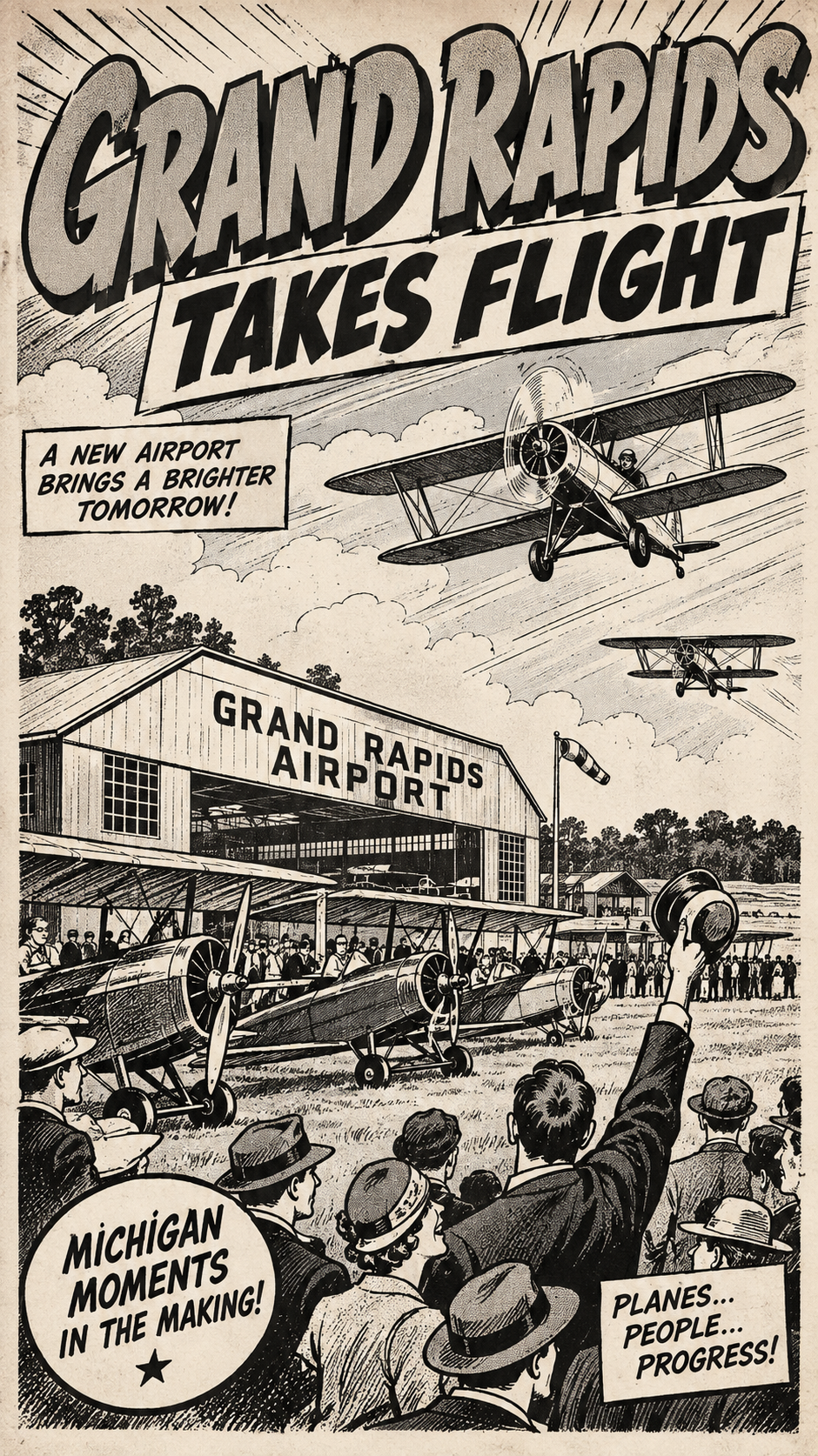
The airport’s own centennial account connects the present facility with a longer local aviation history. Its 2019 commemoration marked a hundred years since the first airport groundbreaking, reminding residents that the modern terminal is one chapter in a story of repeated adaptation. Aviation grew from a local experiment into a practical part of regional life.
For Slingshot Taxi passengers, GRR Airport Shuttle GRR Airport Shuttle service connects Grand Rapids and the West Michigan communities we serve.. A trip may begin at a home in Muskegon, a hotel in Holland or a vacation address near Grand Haven. In the opposite direction, an arriving passenger may be traveling toward family, work or time on Lake Michigan. The terminal is the shared point in journeys whose real beginnings and endings are spread across the region.
The airport’s history is therefore also a history of access. As air travel became more useful, the surrounding communities needed practical ways to reach it. The ground trip brings the airport into daily life for people who do not live beside the runways. It is the portion where a regional travel network becomes a personal journey, carried out one address and one reservation at a time.
Detroit Metro and Michigan’s Expanding Air Connections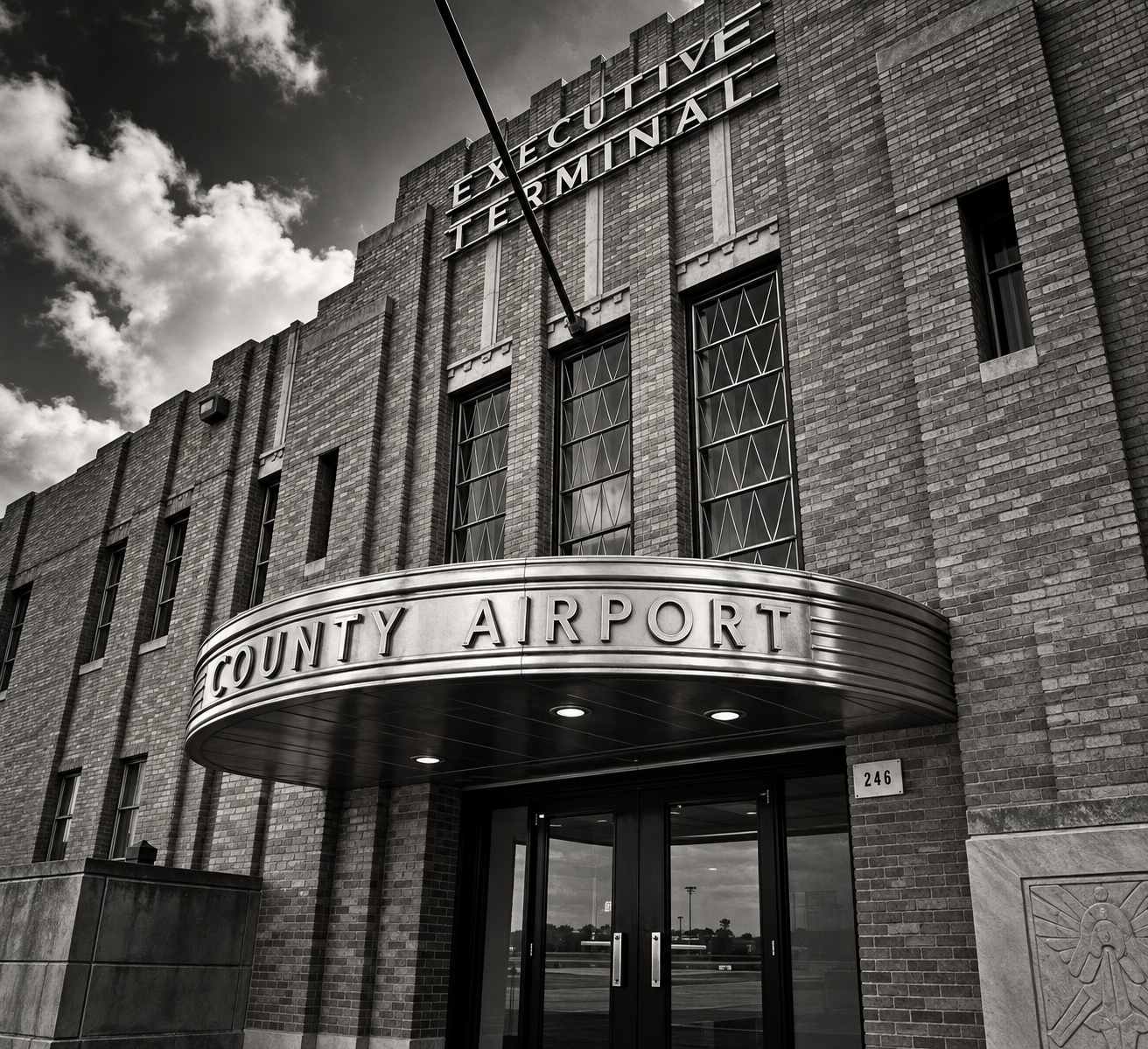
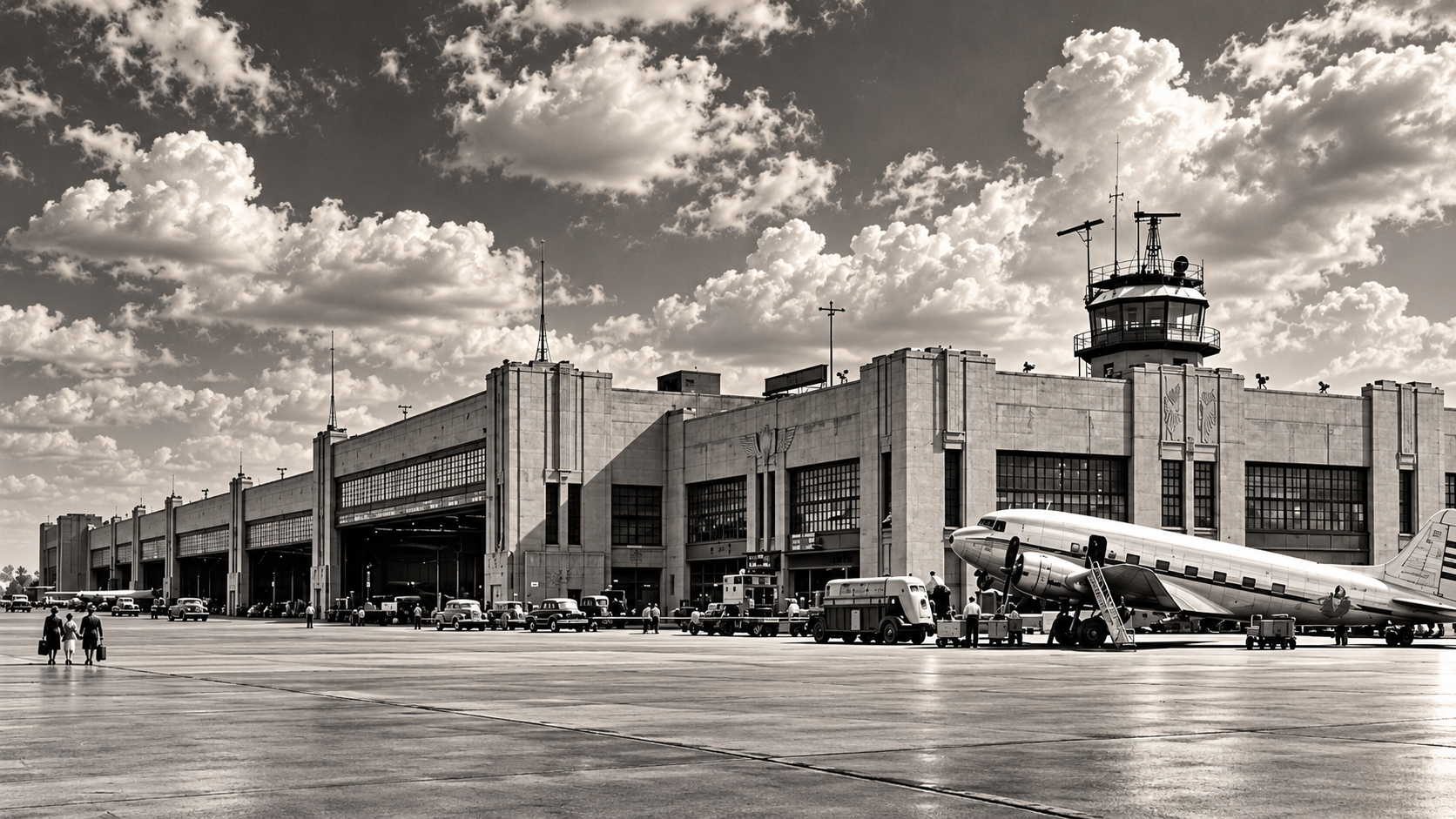
Detroit Metropolitan Wayne County Airport has a history rooted in southeastern Michigan. Groundbreaking for Wayne County Airport took place in 1929, and the airport opened in Romulus on September 4, 1930. During World War II it became Romulus Army Air Field, supporting military aviation. The airport authority’s timeline records the work of 107 Women Airforce Service Pilots assigned there in 1943 to ferry aircraft across the country.
The airport became Detroit-Wayne Major Airport in 1947 and received its present name in 1958. Further terminal development and airline consolidation expanded its commercial role. The McNamara Terminal opened in 2002, followed by the new North Terminal in 2008. These changes illustrate how an airport’s buildings and operating layout evolve to accommodate different generations of passenger travel.
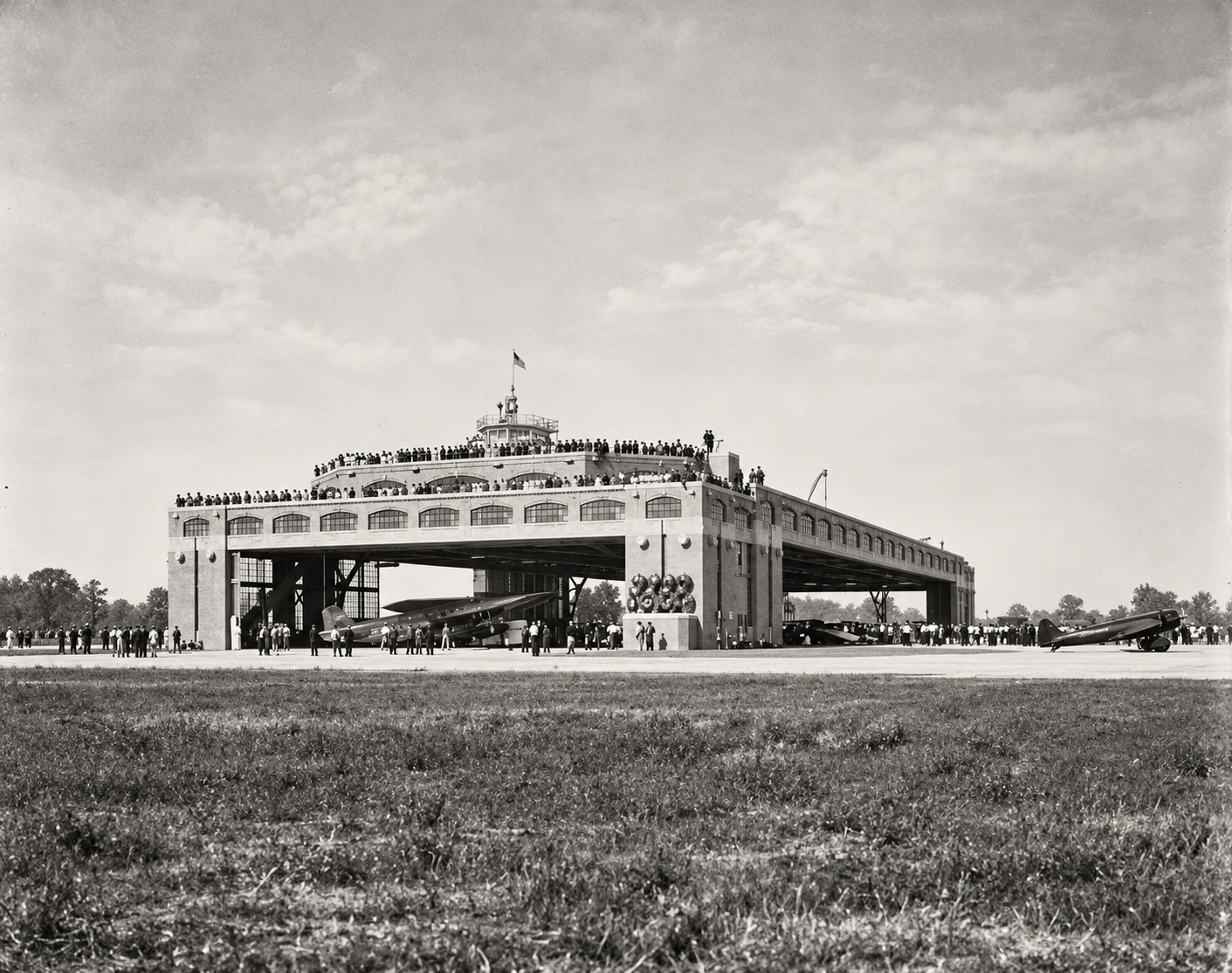
For West Michigan residents, DTW Airport Shuttle transportation also involves a journey across Michigan.. That ground portion deserves the same attention as the departure time on the airline reservation. A passenger may be focused on the eventual destination, but the trip to the terminal comes first. On the return, arriving in Detroit still leaves the final journey home to the lakeshore.
Prearranged transportation gives that cross-state portion a clear place in the travel plan. It allows passengers to think about the full sequence: leaving their pickup address, traveling to the airport, boarding the flight and returning afterward. A family may organize the trip around children and luggage. A business traveler may be arranging departure around a workday. The details differ, but the benefit of planning the ground connection is the same.
DTW’s scale can be seen in the terminal images, where concourses, moving walkways and passenger transport systems form a travel environment of their own. Those interior connections handle movement within the airport. The reserved road journey handles movement beyond it, carrying the traveler toward Grand Rapids, Muskegon, Holland or another West Michigan destination rather than another gate.
Chicago O’Hare and the Connection Across Lake Michigan
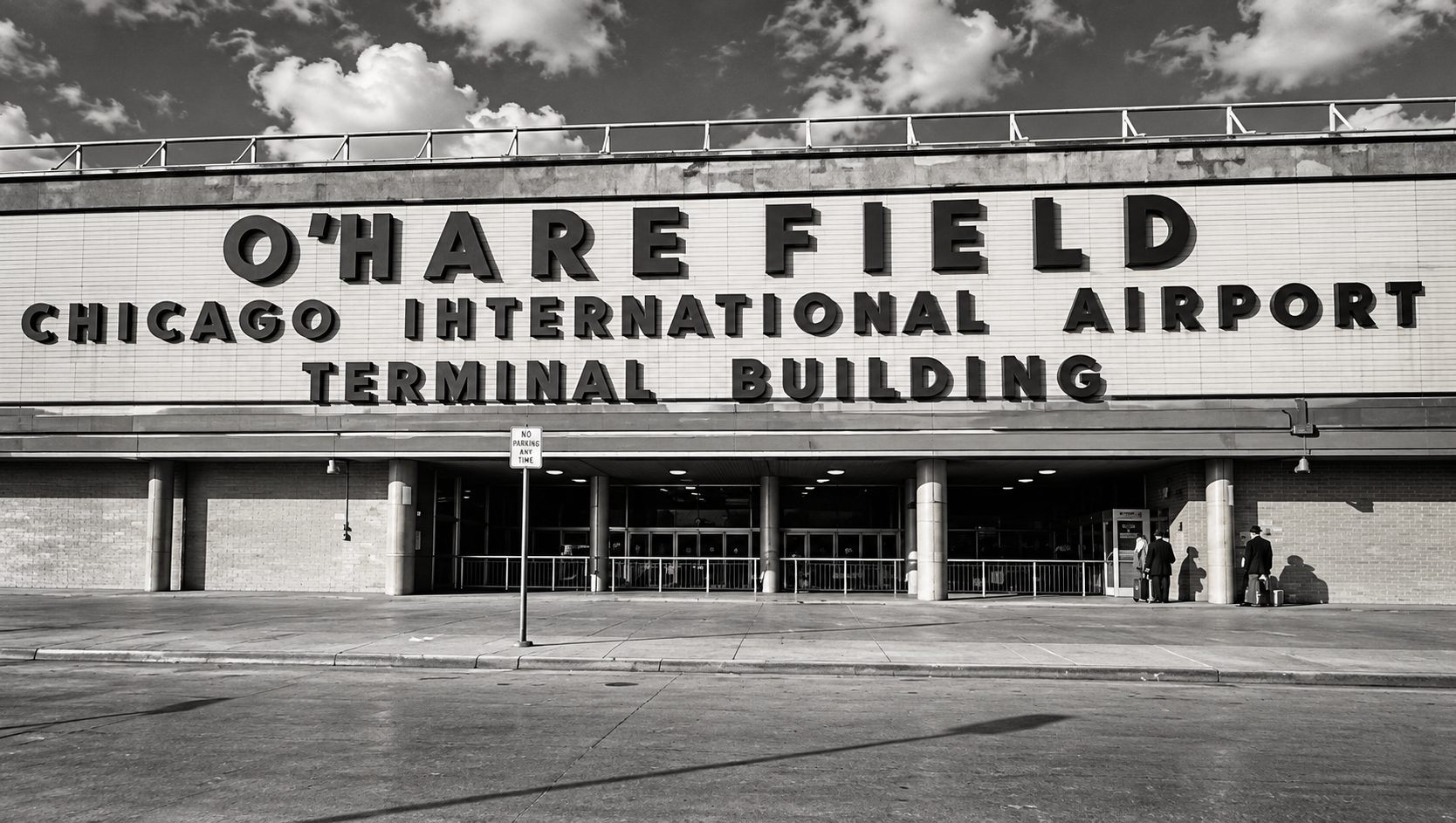
O’Hare’s origins are tied to the site known as Orchard Field, selected for Chicago’s new airport in 1945 after wartime aircraft manufacturing. The Chicago City Council renamed it in 1949 to honor naval aviator Edward “Butch” O’Hare, a Medal of Honor recipient. Commercial operations began in 1955, opening a new chapter in Chicago’s role as a center of passenger transportation.
The airport developed rapidly in the following decades. An expressway connection opened in 1960, and traffic grew as airline operations transferred from Midway. President John F. Kennedy dedicated O’Hare in 1963. Later developments included the extension of Blue Line rail service in 1984 and the opening of the Airport Transit System and International Terminal 5 in 1993. These milestones show that expansion involved both aircraft facilities and the systems used to move passengers on the ground.
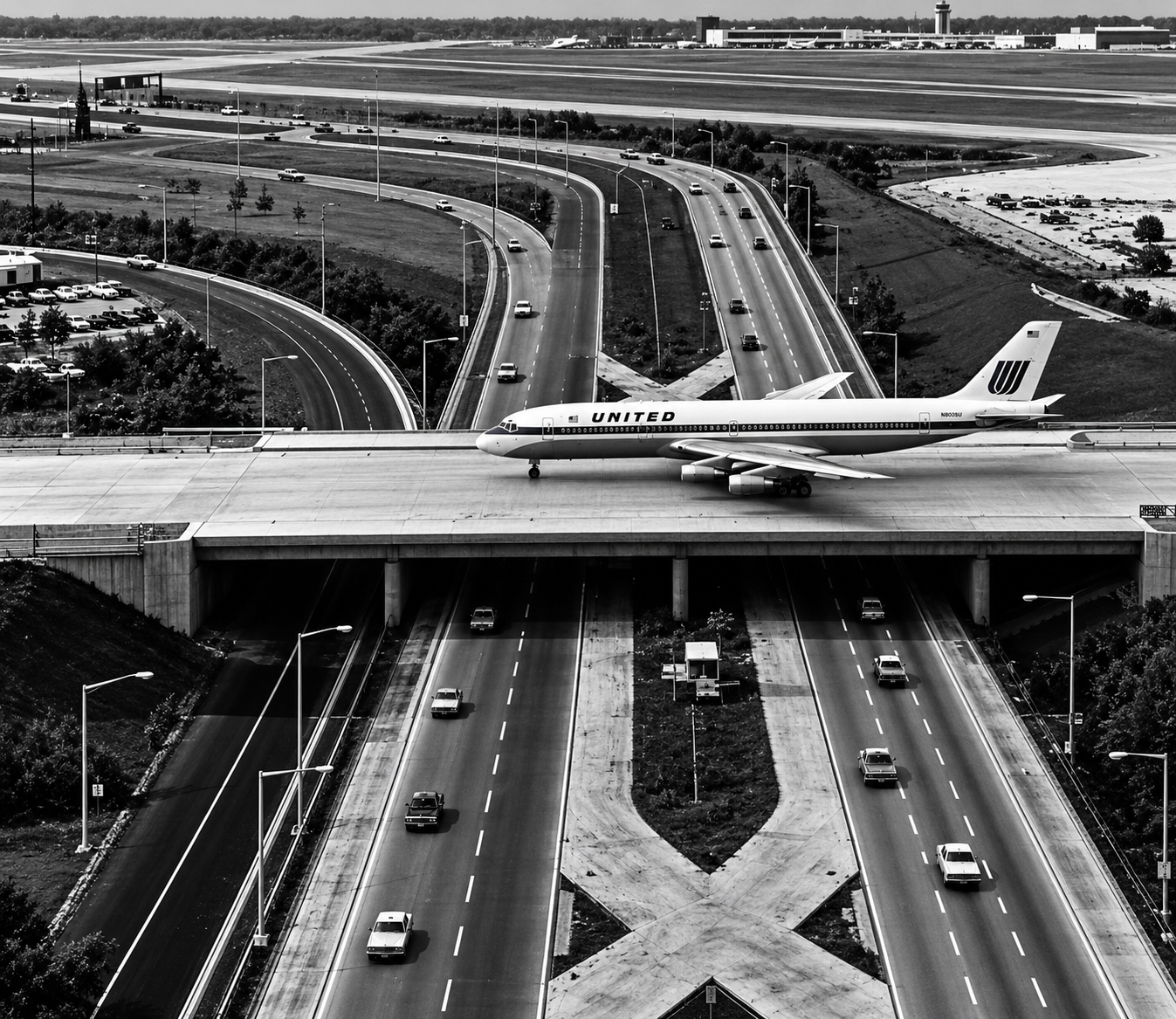
O’Hare’s relationship with West Michigan is broader than the drive around the southern end of Lake Michigan. Chicago and Michigan’s western shore have long belonged to a shared regional travel story. A visitor arriving in Chicago may continue toward a Michigan vacation, a family gathering or a work destination. For that passenger, the airport is a gateway to an itinerary extending across state lines.
Planning this journey means looking beyond the flight. The airport’s internal train, its rail connection to Chicago and an individually reserved trip to West Michigan serve different purposes. An airport transport system can carry someone to another terminal; it does not by itself complete the trip to a home in Spring Lake or a lodging address in Ludington. Matching the transport arrangement to the actual destination makes the journey easier to understand.
Slingshot Taxi provides prearranged ORD Airport Shuttle transportation for our listed West Michigan routes.. South Haven is excluded from our ORD service, even though we serve South Haven in connection with GRR and DTW. This distinction matters because the community list on a history page should describe our region without suggesting that every airport route is available to every town.
Waterways Roads and the Making of the Lakeshore
West Michigan’s transportation story begins long before its modern cities or airports. Indigenous communities lived, traveled and traded throughout the region before the arrival of European settlers. The Grand Rapids Public Museum’s work on Anishinaabek history emphasizes the people of this place as part of an ongoing regional story. A history of travel should recognize those earlier connections rather than treating the arrival of roads or commercial aviation as the beginning of movement through the landscape.
Lake Michigan and the rivers reaching it shaped the location of many communities. Water connected places that were difficult to reach by land, and the shoreline offered opportunities for harbors, commerce and settlement. Later roads and railways changed the travel options, but they developed around a geography that had already influenced where people lived and worked.
The West Michigan Pike is an especially useful link between transportation and tourism. Developed between 1911 and 1922, it was designed to make automobile travel along Michigan’s western shore more practical and to attract vacationers from Chicago. The improved route supported lodging, dining and attractions in the communities it connected. It turned access to the lakeshore into something that could be planned as an automobile journey.
The consequences were more personal than a line on a road map suggests. Better access allowed a visitor to return to a favorite place and a family to organize a holiday around a shoreline destination. Communities could welcome travelers who arrived from farther away. The route helped connect a landscape of beaches and towns with a wider market of people seeking time beside the lake.
Airport transportation carries that connecting role into a different era. Some visitors now approach the lakeshore after a flight instead of completing the entire trip by road. The need is still to make the destination accessible. The modern driver’s task fits within this long regional pattern: linking a larger transportation route with the particular community a passenger came to reach.
Muskegon and Its Working Waterfront
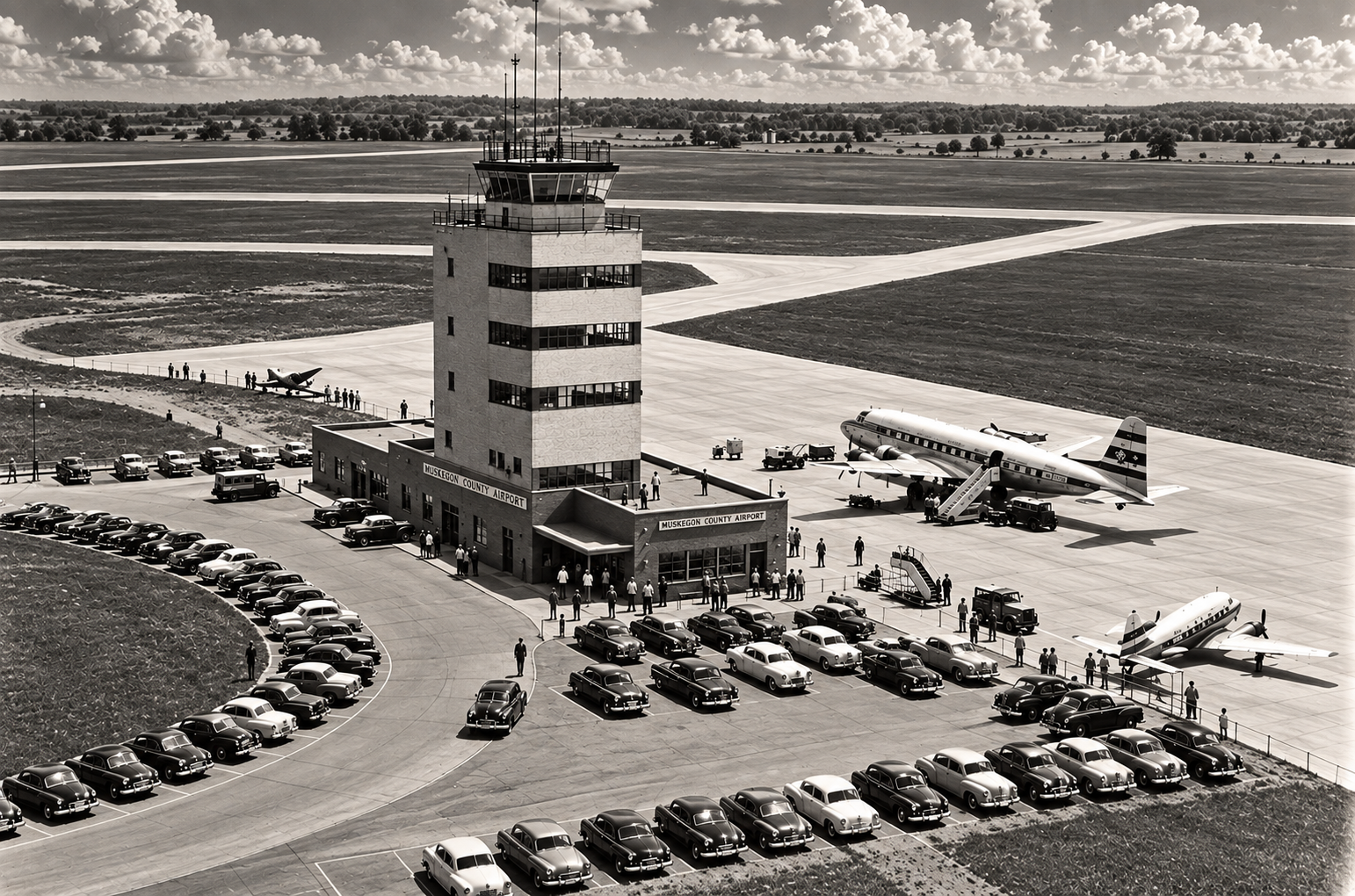
Muskegon’s history is closely connected to its lake, river and lumber industry. The Lakeshore Museum Center’s interpretation of local lumbering describes the sawmills and equipment that shaped the area’s working landscape. Timber moved through a system that linked inland forests, river travel, processing and shipment. The waterfront was part of a commercial network whose influence reached well beyond the city.
That history helps explain why Muskegon belongs in an essay about transportation. The city grew around the movement of goods and people, and its waterfront remains an important part of how residents and visitors understand the place. A modern airport passenger may be traveling for reasons far removed from the lumber era, but the journey still arrives in a community shaped by connections to the wider region.
Muskegon is also Slingshot Taxi’s home community. Our airport transportation links local pickup addresses with GRR, DTW and O’Hare. For visitors, the airport journey may be the first stage of a stay on the lakeshore. For residents, it may be the beginning of travel away and the final stage of returning home. The same route serves both sides of that relationship.
Grand Haven Spring Lake and Ferrysburg

Grand Haven’s location near the meeting of the Grand River and Lake Michigan connects its history with commerce, manufacturing and recreation. The local visitors bureau describes the arrival of the railroad in 1858 as a development that supported both industry and resort travel. The area’s growth was tied to the ability to move products outward and bring visitors inward.
Spring Lake adds another part of the regional resort story. The visitors bureau’s account describes the Spring Lake House, opened in 1871, as a hotel and spa offering lodging and recreation. The historical society also preserves the community’s hotel and cottage heritage. These accounts show that people traveled to the area for leisure long before today’s airport trips and online vacation reservations.
Ferrysburg contributes its own industrial and civic history to the Tri-Cities. The city’s historical account traces the influence of the Ferry family and the businesses that developed around the local waterways. Ferrysburg became a city in 1963, but its community story reaches further back. Its identity is connected to its neighbors while remaining distinct.
For transportation planning, the three names should never become interchangeable. A passenger who needs to reach Ferrysburg may have a different pickup address and destination from someone visiting Grand Haven or Spring Lake. Their closeness helps explain the shared history, but good service depends on the specific place. An airport reservation turns a regional name into a clear address that the driver and passenger both understand.
Holland West Olive and Port Sheldon
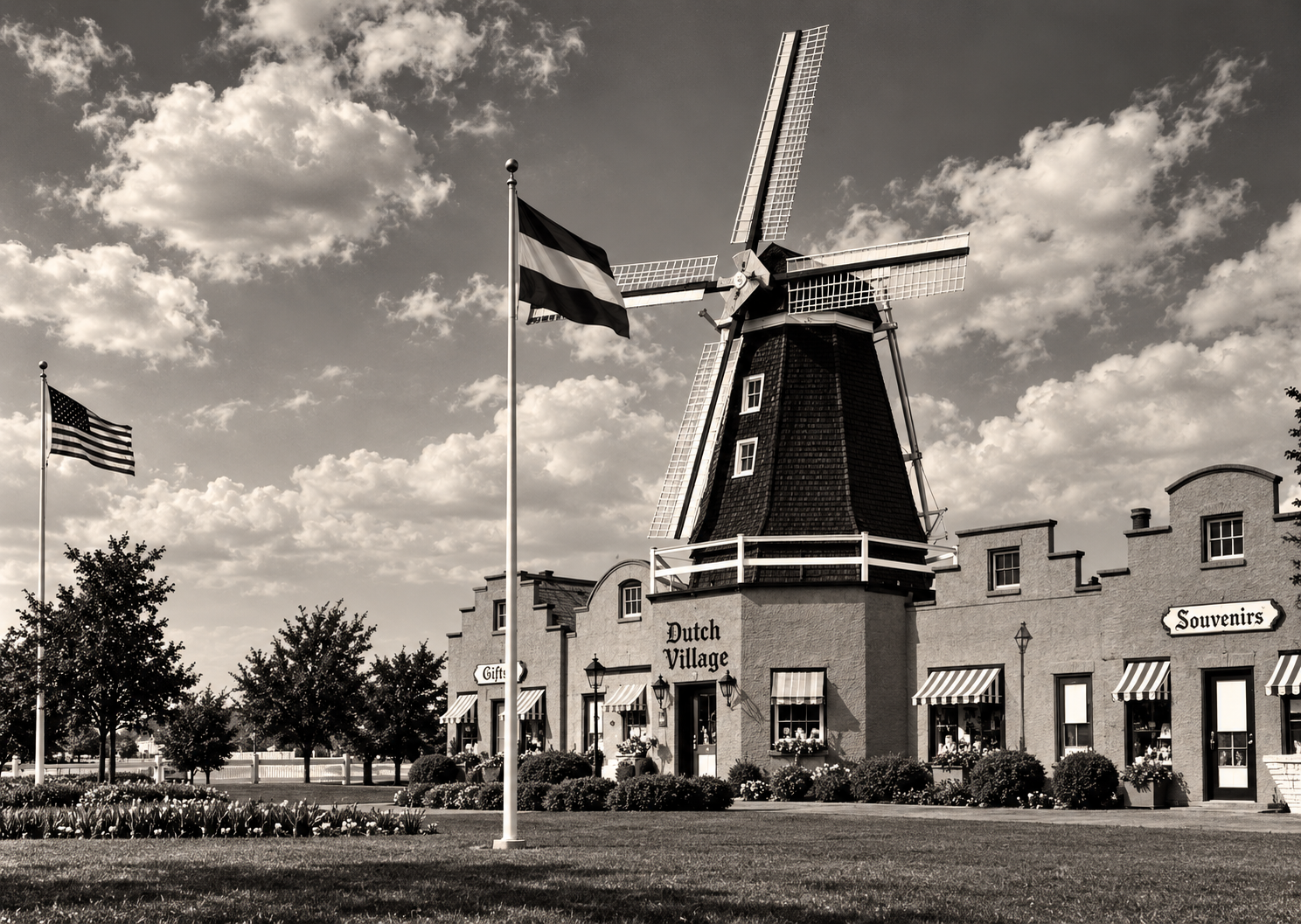
Holland’s Dutch settlement history includes the arrival of immigrants led by Albertus C. Van Raalte in 1847. Holland Township’s official account records the creation of the township that March and the growth of the new community. The heritage associated with this period became an enduring part of the area’s identity.
Modern visitors encounter that identity alongside the ordinary life of a working community. Holland is a destination for vacations and family visits as well as business travel. The same airport route can bring someone to a leisure stay or carry a resident outward for work. A history page should reflect this range, because towns remain places to live and earn a living even when they are widely known to tourists.
West Olive and Port Sheldon broaden the story beyond the larger downtowns. Port Sheldon Township was organized in 1924 after separating from Olive Township, according to its official history. The connection between those communities is part of the local geography and civic development of the lakeshore.
These destinations also illustrate why door-to-door ground transportation can be useful. A passenger’s final address may be outside a central hotel district or near a quieter part of the shoreline. Simply reaching a nearby city does not always complete the trip. Slingshot Taxi includes West Olive and Port Sheldon among the communities in our airport service area, giving those specific destinations a place in the travel plan.
Saugatuck and the Art Coast

Saugatuck and neighboring Douglas are associated with an arts tradition and a long history of welcoming creative people. The destination organization’s account of the area describes a community where unconventional ideas and different ways of life have contributed to its character for more than a century. This cultural history adds another reason people have traveled toward the lakeshore.
Travel to Saugatuck can be part of a planned holiday, a visit to friends or another personal journey. Its place in the region’s story shows how destinations attract travelers through more than their natural setting alone. The atmosphere of a community, its creative life and the experience of spending time there can become reasons to return.
An arriving passenger still needs to get from the airport to that experience. The ground connection is the practical step between the idea of a visit and the place itself. Slingshot Taxi’s Saugatuck airport routes bring that destination into the same reservation framework as the other lakeshore communities we serve.
South Haven and the Maritime Lakeshore
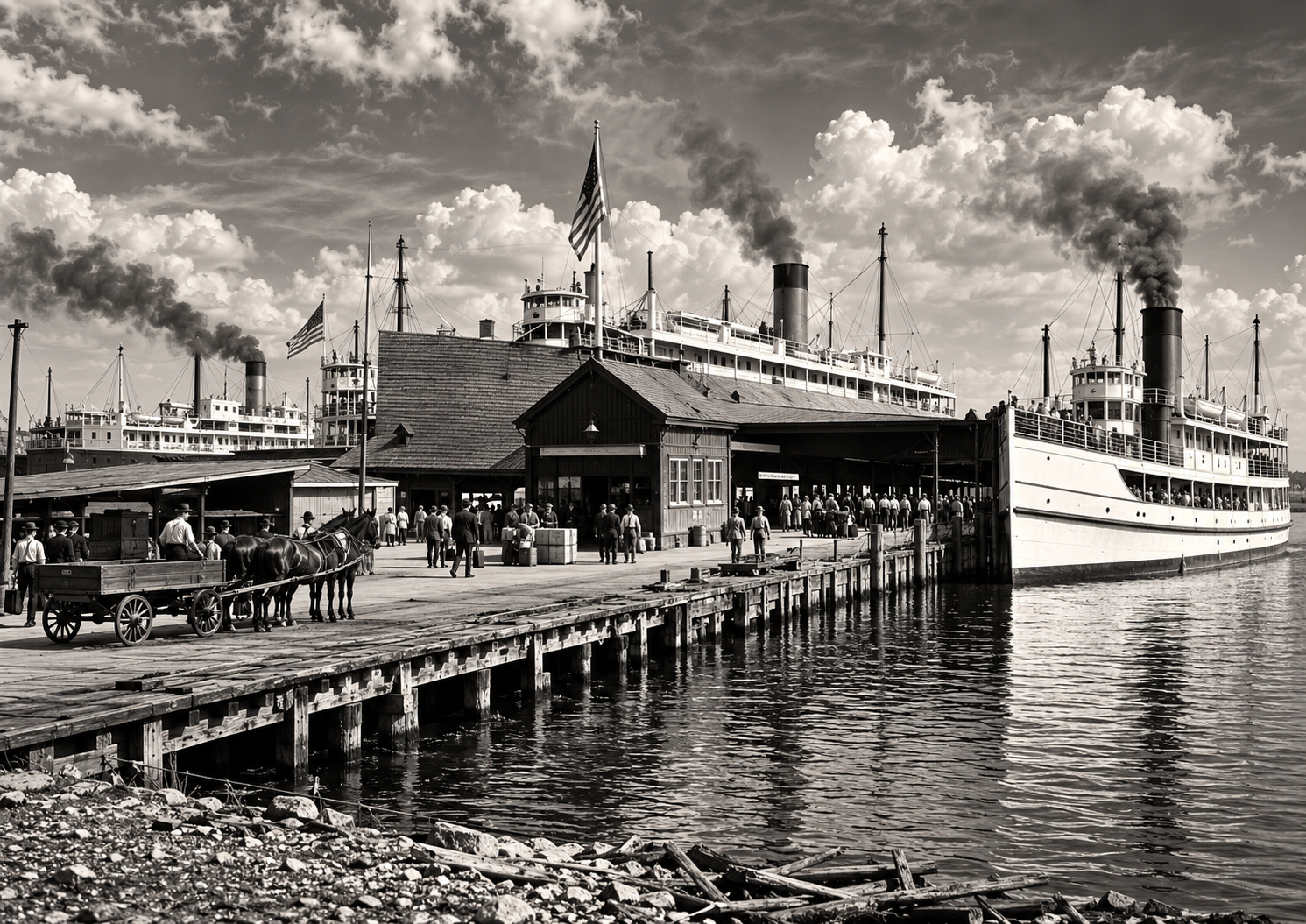
South Haven’s history connects the Black River harbor with lumber, shipping, fishing and rail travel. The local destination organization records the opening of rail service to Kalamazoo in 1871 and the importance of commercial activity around the harbor. Over time, the waterfront also became a setting for recreation and visitor travel.
The Michigan Maritime Museum preserves the people, vessels and skills associated with this freshwater history. Its exhibitions, boatbuilding work and historic or replica vessels help show how much of Michigan’s life depended on the water. The harbor is more than a scenic feature; it is a record of the transportation systems that connected the community with other places.
South Haven belongs to Slingshot Taxi’s GRR and DTW service area. It is not one of our O’Hare routes. Including this distinction keeps the essay useful to readers who move from learning about the town to arranging an actual trip. History can introduce a destination, but booking information needs to remain precise.
Pentwater and Ludington
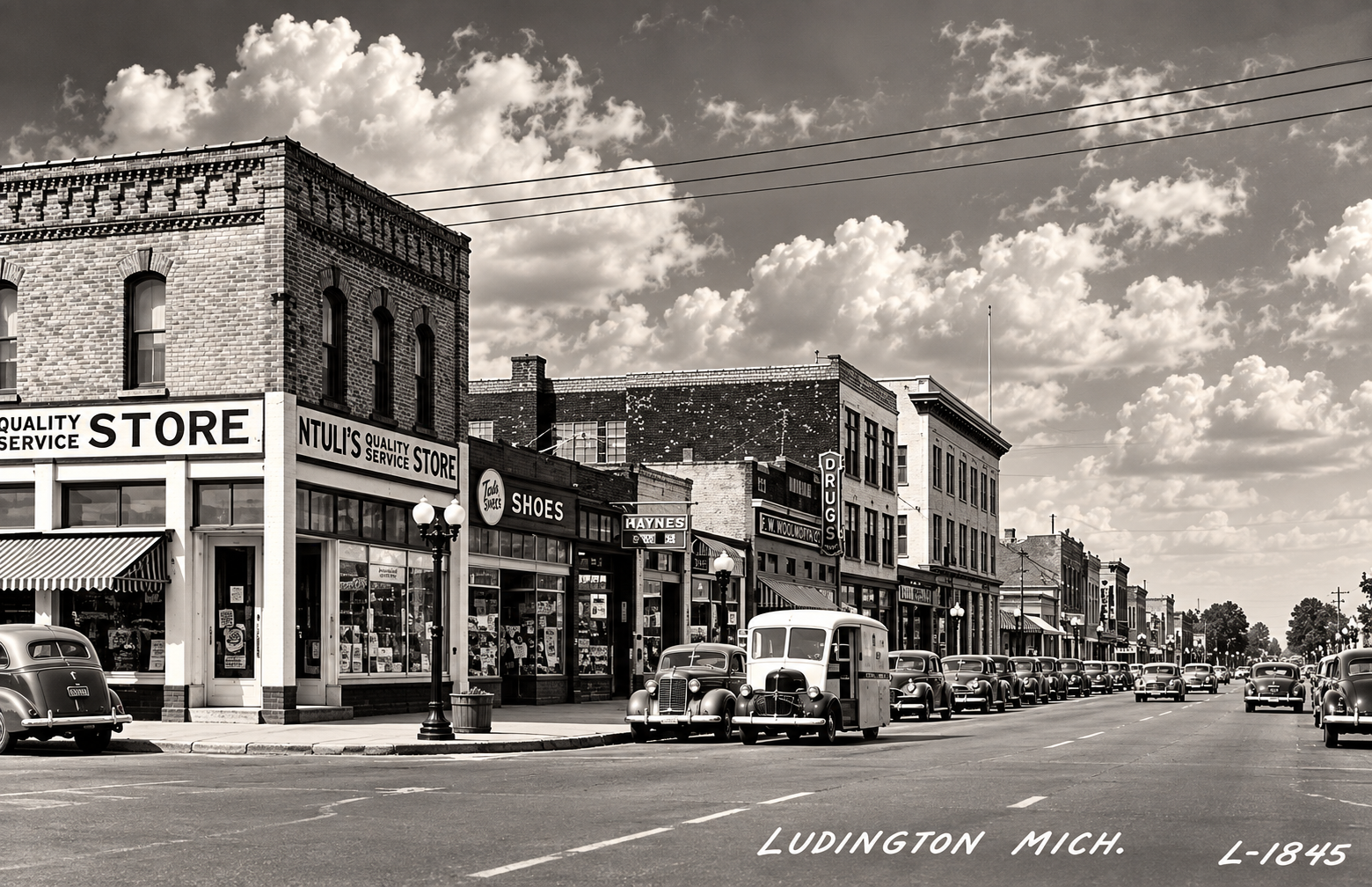
Pentwater’s local history describes a nineteenth-century community growing around lumber production and its harbor. In the 1850s, Charles Mears developed a channel and waterfront facilities to support the movement of lumber and supplies. The village’s history links the harbor with Chicago trade and later public access to the shoreline.
Pentwater demonstrates how a working waterfront can develop a different role over time. Places once organized around shipping and manufacturing can become valued for their beaches, village streets and time on the water. The historical geography remains visible even when the purpose of a visit has changed. A traveler may arrive for a quiet stay without realizing how much commercial movement once passed through the same area.
Ludington’s story brings lumber, agriculture and maritime transportation together. The local visitors bureau highlights this heritage through historical sites and museums. The city’s waterfront and carferry history make it a particularly strong example of travel connecting one community with another across Lake Michigan.
For airport passengers traveling to Pentwater or Ludington, the northern portion of the lakeshore is the final destination rather than a stop on the way elsewhere. These trips show why regional ground transportation needs a broader view than the immediate airport area. The traveler’s journey continues until the right town and the right address have been reached.
Traverse City and the Northern Reach of Our Routes
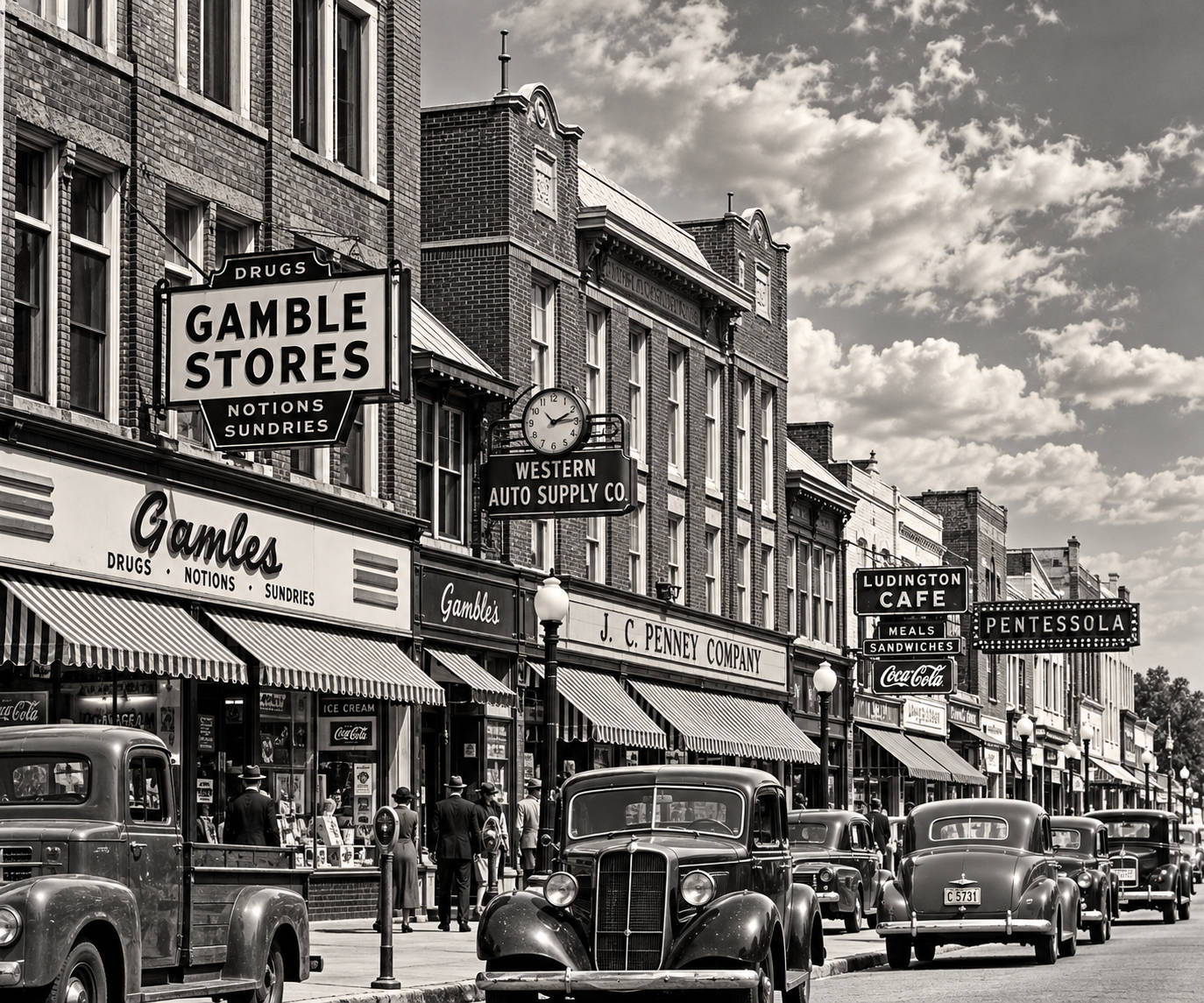
Traverse City extends the regional story into the Grand Traverse area. The Traverse Area Historical Society’s timeline records the development of local industry, transportation and civic life. The University of Michigan’s archive of Hannah and Lay Company records also documents the lumber and commercial connections between Traverse City and Chicago.
Visitors can encounter that past through preserved buildings, local historical interpretation and the waterfront setting. Traverse City Tourism identifies historic sites and organizations that connect the area’s present visitor experience with its earlier communities and industries. The city is part of the wider story of Michigan destinations whose character developed through connections with places farther away.
Serving Traverse City within Slingshot Taxi’s airport routes recognizes that a passenger’s final destination may be far beyond the nearest metropolitan area. The ground journey should be considered while the flight is being planned, particularly when a traveler intends to continue north. Advance arrangements make the relationship between airport and destination clear before the trip begins.
Electric Forest Long Distance Travel and the Journey Today
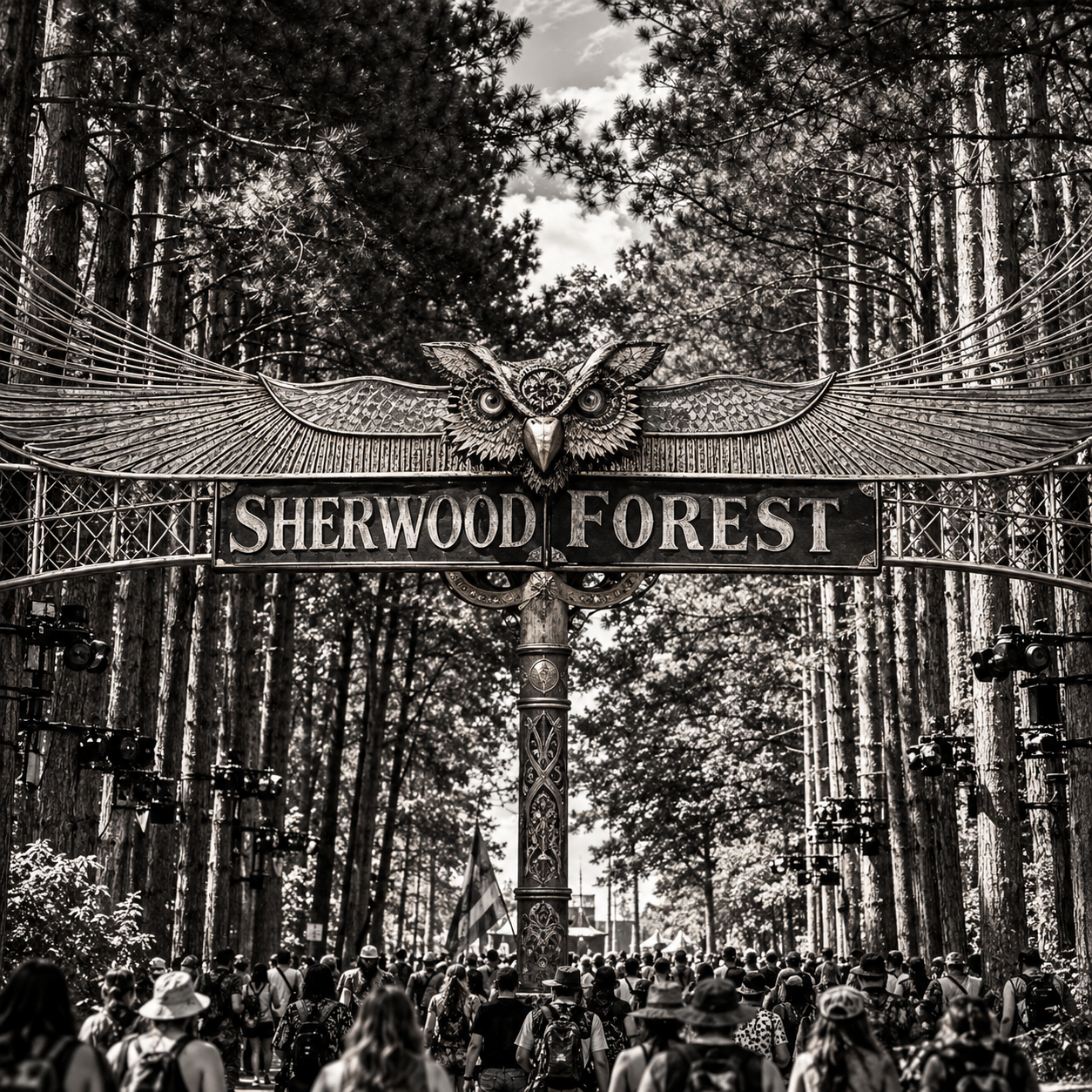

Not every regional journey is tied to a permanent downtown or a conventional holiday. Slingshot Taxi also offers airport transportation for Electric Forest travelers. An event can become the reason people cross the country and then continue into West Michigan. The flight brings them to the region; the reserved ground trip brings them to the destination they traveled to experience.
The same need exists beyond airports. A traveler may need a longer journey for a family visit, business trip, event, vacation, medical appointment or another special destination. Slingshot Taxi provides prearranged long-distance transportation from West Michigan to destinations throughout Michigan and beyond. These trips are quoted individually according to the destination and transportation needs. They belong alongside our airport focus because they serve the same basic purpose: completing a planned journey with a driver.
The history of taxis, shuttles and limousines shows how many different vehicles have been used to solve that problem. Horse-drawn cabs supplied an individual ride. Motor taxis made the service practical in a new technological age. Chauffeured cars developed a tradition of prepared private travel. Airport shuttles connected a rapidly expanding aviation network with the places passengers actually needed to reach.
Across West Michigan, the larger story runs through waterways, harbors, timber industries, railway connections and roads built to welcome visitors. The airports added another chapter, opening more possibilities for departure and arrival. Muskegon, Grand Haven, Spring Lake, Ferrysburg, Holland, West Olive, Port Sheldon, Saugatuck, South Haven, Pentwater, Ludington, Traverse City and Grand Rapids each contribute their own history to that regional network.
Slingshot Taxi carries out a present-day role within that landscape. We provide airport shuttle transportation by appointment, with published one-way fares charged per vehicle for up to six passengers. Please reserve at least 24 hours in advance and book each direction separately. Our airport pages show the routes and fares for GRR, DTW and O’Hare, and we can discuss individually quoted long-distance or special-destination travel with you.
Whether the journey begins at an airport terminal, a lakeshore home or another agreed pickup location, the final connection deserves attention. Behind every route is a passenger with a particular reason to travel and a particular place to reach. That is the part of transportation history we continue each day: bringing a larger journey to the right doorstep.
For airport reservations or a long-distance quote contact us via e-mail or call 231.886.4714